Based in Luton
IMWHS logo

Temperature Monitoring & Inspections in Luton

Temperature monitoring, routine inspections and system audits to support Legionella control. Discuss the frequency and records required for your site.

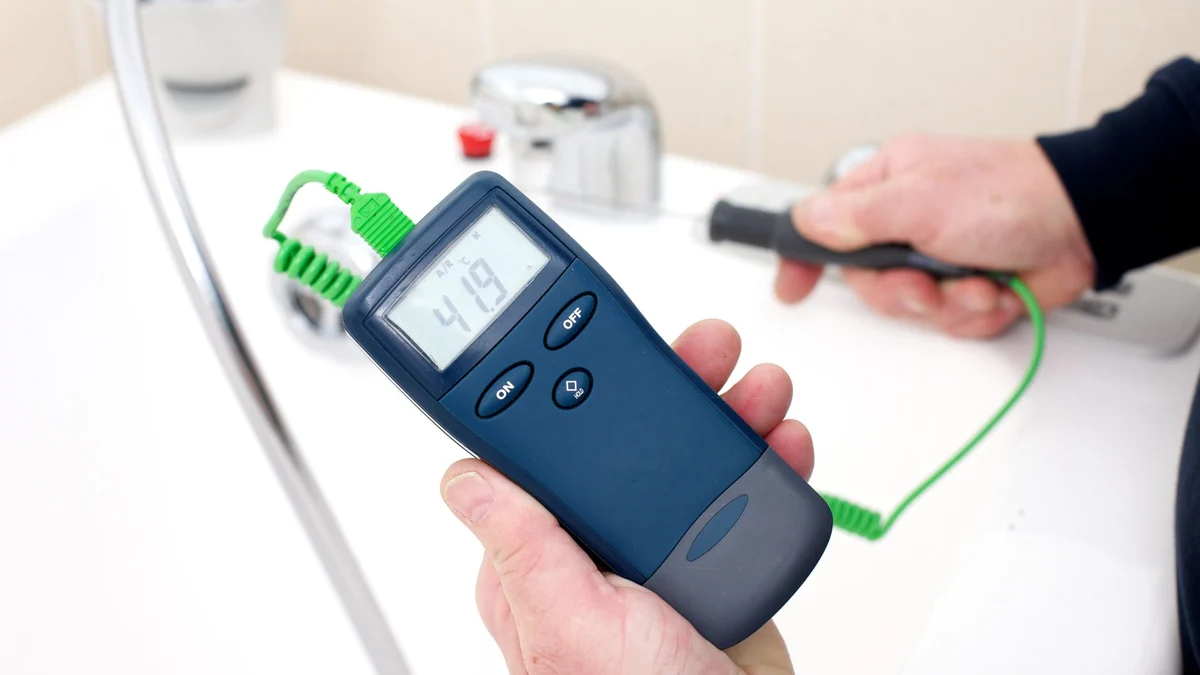
Digital probe measuring water temperature at a tap

20 years

Isaac's Legionella experience

HSE ACoP L8

compliant assessments

Gas Safe

registered

£5m

public liability cover

Service overview

What temperature monitoring involves

What it is

Temperature monitoring is the routine checking of hot and cold water temperatures at key points in your system to confirm Legionella is being controlled. Inspections cover the condition of tanks, water heaters and outlets. Together they form the routine compliance checks and system audits your written scheme requires.

Who it's for

It is for any building with a Legionella control scheme: healthcare facilities, schools, golf clubs, office buildings and landlords with stored water systems. It is especially useful where there is no in-house team to carry out checks consistently.

When you need it

Monitoring runs on a regular schedule set out in your written scheme, with some checks monthly and others at longer intervals. Extra checks are useful after works, after closures, or when a problem has been found.

Why use a specialist

Monitoring only works if it is done consistently and accurately, at the right outlets, with results recorded and acted on. Isaac Maginn brings 20 years' experience in Legionella control to our monitoring and inspection services.

The risk

When monitoring is missed or done badly

Temperatures drift. Water heaters lose efficiency, valves fail and insulation deteriorates. Without regular monitoring, a system can move into the temperature range where Legionella multiplies without anyone noticing.

Missed checks leave gaps in your records that can be difficult to explain to an inspector or insurer. More importantly, a failing system can expose occupants to risk for months before it is discovered.

Common mistakes we see

  • Checking only outlets that are easy to reach.
  • Recording readings without acting on ones that are out of range.
  • Letting checks lapse during holidays or staff changes.
  • Not inspecting tanks and water heaters alongside temperature checks.
  • Keeping paper logs that get lost or are never reviewed.

Service requirements

Discussing your temperature monitoring & inspections requirements.

The scope, schedule, checks and any reporting or handover requirements are agreed for your property at quote stage.

  1. Step 1

    Review your scheme

    We confirm which checks are needed, where and how often.

  2. Step 2

    Set a schedule

    We agree a monitoring timetable that fits your building.

  3. Step 3

    Routine checks

    Our team records temperatures and inspects tanks, heaters and outlets.

  4. Step 4

    Flag issues

    Anything out of range is reported with a recommended action.

  5. Step 5

    Records and audit

    Discuss the records and system audits needed for your site at quote stage.

Benefits

What you get.

Consistent checks

Routine monitoring can support your control programme.

Early detection

Monitoring can identify temperatures outside control limits.

Complete records

Discuss recording and reporting requirements for your site.

Less admin for you

We handle the checks and the paperwork.

Expert interpretation

Results are explained, not just logged.

Remedial support

Our team can fix problems found during checks.

In detail

Monitoring and inspection in detail

Good monitoring is about the right checks, at the right points, at the right frequency.

Sentinel outlets

Sentinel outlets are the nearest and furthest outlets on each part of the system. Checking these shows whether hot water is reaching outlets hot enough and whether cold water is staying cool.

Water heaters and returns

We check flow and return temperatures on calorifiers and hot water cylinders to confirm water is stored and circulated at a temperature that controls bacteria.

Cold water storage tanks

We inspect tanks for condition, lids, insulation, debris and water temperature. Problems found can be resolved through tank cleaning and disinfection.

Mixing valves and showers

Thermostatic mixing valves and showers are inspected as part of the regime, with servicing or descaling arranged where needed.

Different buildings

Healthcare sites and schools often need more frequent checks and careful planning around occupants. Smaller commercial and domestic properties need a proportionate approach.

Guide

Why routine monitoring is the backbone of Legionella compliance

Temperature is the main method of Legionella control in most UK buildings. Published HSE guidance (HSG274) sets out typical targets: hot water stored at 60°C or above, hot water reaching outlets at 50°C or above (55°C in healthcare premises) within a minute, and cold water below 20°C within two minutes. Routine monitoring is how you prove your system meets these targets.

Typical monitoring tasks include monthly checks of sentinel outlets, monthly checks of water heater flow and return temperatures, and less frequent checks of a representative sample of other outlets, along with periodic inspection of cold water storage tanks. Your written scheme will set out the exact tasks and frequencies for your building.

Monitoring only adds value if the results are reviewed and acted on. A log full of low hot water readings that nobody has looked at is evidence of a problem, not of control. We flag any results outside the expected range, explain what they mean and recommend action.

Routine inspections also give an experienced eye regular access to your system. During checks we look for signs of trouble: damaged tank lids, deteriorating insulation, scaled shower heads, failing mixing valves. Catching these early keeps maintenance small and predictable.

For schools, healthcare facilities, golf clubs and office buildings across Luton, Bedfordshire and Hertfordshire, we build monitoring around the way the building is used, including holidays and quiet periods when the risk of stagnation rises.

Monitoring records help document checks, results and any corrective action required.

Monitoring in different settings

Healthcare: monitoring is more frequent and more closely scrutinised, with hot water outlet targets of 55°C and close attention to mixing valves. Clear records are essential for estates teams and auditors.

Schools: monitoring continues during holidays, when the risk of stagnation is highest, with additional flushing and temperature checks before term begins.

Golf clubs and offices: checks are scheduled around usage peaks, and unused areas such as vacant floors or seasonal changing rooms are included rather than forgotten.

Landlords: properties with stored water or several units benefit from proportionate checks, especially between tenancies when properties may stand empty for weeks.

Whatever the building, the aim is the same: a reliable, consistent record that shows your water system is staying outside the temperature range in which Legionella grows. When a result does fall outside that range, a quick, clear response is just as important as the check itself, and our team can carry out any remedial work needed.

Book a free site visit

FAQs

Temperature Monitoring & Inspections: your questions answered.

07398 411881

8am – 8pm, Monday – Sunday

How much does temperature monitoring cost?

+

It depends on the number of outlets and how often checks are needed. Initial site visits and Legionella quotes are free. We provide detailed quotations.

Are initial site visits and Legionella quotes free?

+

Yes. Initial site visits and Legionella quotes are free. We provide detailed quotations.

How often should temperatures be checked?

+

Your written scheme sets the frequency. Some checks are monthly and others less often. We'll confirm the right schedule for your building.

What happens if a reading is out of range?

+

We report it with a recommended action, and our team can carry out any remedial works needed.

Will I get records?

+

Discuss the records and reporting required for your monitoring programme at quote stage.

Can you cover monitoring during holidays?

+

Yes. Quiet periods are when risk rises, so we plan checks around them.

Do you also inspect tanks?

+

Yes. Tank and water heater inspections form part of our routine checks.

What temperatures should hot and cold water be?

+

Published HSE guidance sets typical targets: hot water stored at 60°C or above and reaching outlets at 50°C or above (55°C in healthcare) within a minute, and cold water below 20°C within two minutes.

What is a sentinel outlet?

+

Sentinel outlets are the nearest and furthest outlets on each part of the system. Checking them shows whether the whole system is reaching the right temperatures.

When can you attend?

+

We're available 8am to 8pm, seven days a week, which makes it easier to schedule work around your opening hours. Call 07398 411881.

Free site visit

Discuss your routine monitoring programme.

Book your free site visit for temperature monitoring & inspections. Initial site visits are free; the proposed work and terms are set out in a detailed quotation.

07398 411881

isaac@imwhs.com · 8am – 8pm, Monday – Sunday

  • Free initial site visits and Legionella quotes
  • Gas Safe Registered · £5m public liability
  • Warranty on remedial plumbing and boiler installations; terms at quote stage