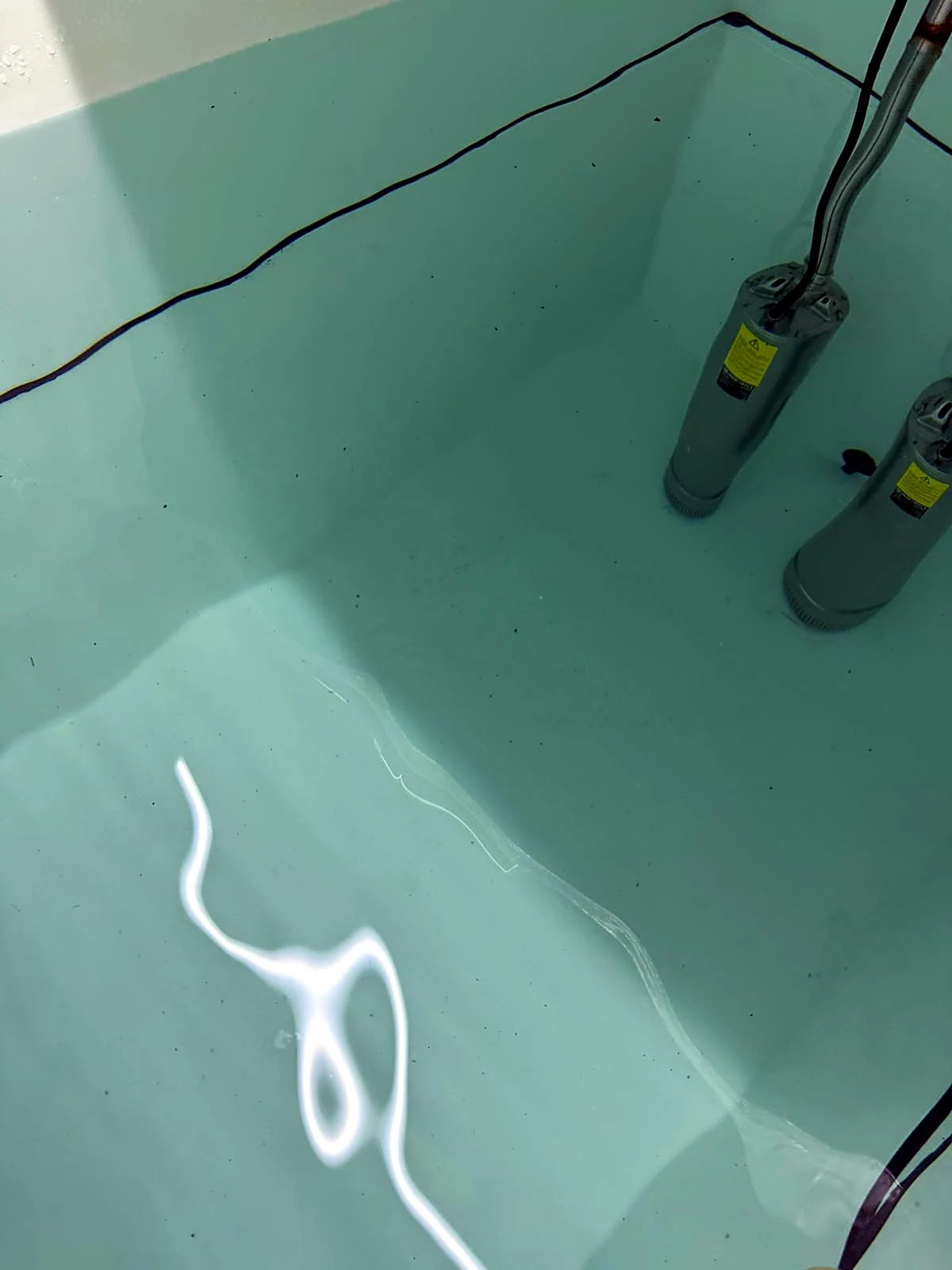
Based in Luton
IMWHS logo

HSE-compliant legionella risk assessments in Luton

Find out exactly where your water system stands, what needs doing and in what order. HSE ACoP L8 compliant assessments from a team led by Isaac Maginn, with 20 years' Legionella experience.

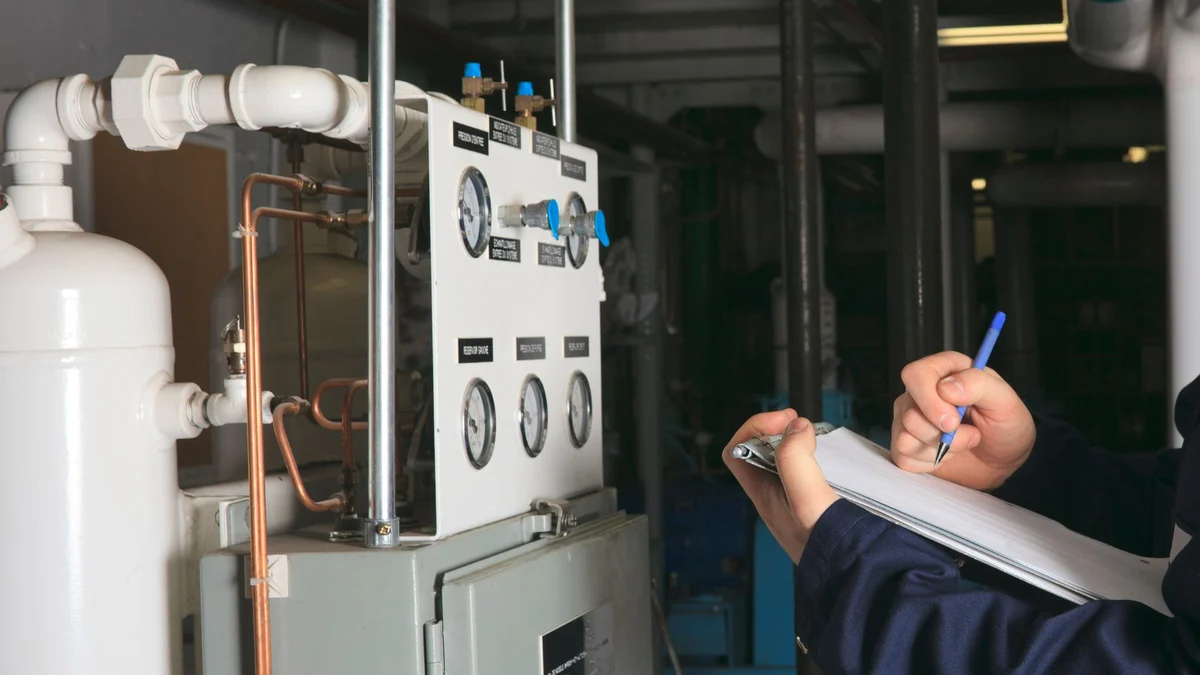
Inspector recording observations beside plant room equipment

20 years

Isaac's Legionella experience

HSE ACoP L8

compliant assessments

Gas Safe

registered

£5m

public liability cover

Service overview

What a Legionella risk assessment gives you

What it is

A Legionella risk assessment is a structured inspection of relevant parts of your hot and cold water system where Legionella bacteria could grow and spread. We survey tanks, calorifiers, pipework, outlets and little-used areas, record temperatures, and identify the conditions bacteria need: water between 20°C and 45°C, stagnation, and a build-up of sludge, scale or biofilm. The report contents and any follow-up requirements are agreed as part of the assessment scope.

Who it's for

Anyone responsible for a building with a water system has a legal duty to assess the Legionella risk. That includes employers, facilities managers, school business managers, healthcare estates teams, golf club committees, office landlords and residential landlords. If you are the person in control of the premises, the duty sits with you, even if day-to-day maintenance is handled by someone else.

When you need it

You need an assessment if you have never had one, and it should be reviewed whenever something changes: alterations to the water system, a change in how the building is used, a change of the person responsible, results from monitoring showing control is failing, or a case of Legionnaires' disease linked to the site. Many organisations also review on a set cycle so the assessment never drifts out of date.

Why use a specialist

A generic, tick-box assessment can leave real risks unrecorded and your organisation exposed. Isaac Maginn has spent 20 years helping organisations improve their Legionella control, so we know where problems hide: dead legs left after refits, oversized storage tanks, blending valves set wrongly, showers that are rarely run. Every Legionella risk assessment we carry out is fully compliant with HSE ACoP L8 guidelines.

The risk

What happens if the risk isn't assessed

Legionella bacteria multiply quietly. There is no smell, colour or taste to warn you. When contaminated water is turned into fine droplets, through a shower, tap, spray or cooling system, those droplets can be breathed in and cause Legionnaires' disease, a serious and potentially fatal form of pneumonia. Older people, smokers and those with weakened immune systems are most at risk, which is why healthcare settings, care facilities and schools need particular care.

Without a valid assessment you have no evidence that you have met your legal duty. If an outbreak is traced to your premises, or an inspector visits, the lack of an assessment is often the first thing questioned. Beyond the human cost, organisations can face enforcement action, prosecution, closure of facilities and serious damage to their reputation. Fixing a contaminated system after the event is also far more disruptive and costly than controlling the risk from the start.

Common mistakes we see

  • Treating the assessment as a one-off document and never reviewing it after building changes.
  • Relying on an assessment that does not cover the whole system, such as missing roof tanks or plant rooms.
  • Assuming a small building or domestic-style system carries no risk.
  • Carrying out the assessment but never acting on the recommendations.
  • Keeping no records of monitoring, so you cannot prove control is working.

Service requirements

Discussing your legionella risk assessments requirements.

The scope, schedule, checks and any reporting or handover requirements are agreed for your property at quote stage.

  1. Step 1

    Free site visit

    We visit, understand how the building is used and who is responsible, and agree the scope of the assessment.

  2. Step 2

    Full system survey

    The survey scope, including tanks, heaters, pipework, outlets and temperature readings, is agreed for your system.

  3. Step 3

    Risk evaluation

    We assess each part of the system against HSE ACoP L8 and rate the level of risk.

  4. Step 4

    Written report and action plan

    Discuss report contents, any schematic information and monitoring requirements at quote stage.

  5. Step 5

    Ongoing support

    We can carry out the remedial works, monitoring and reviews so the actions actually get done.

Benefits

What you get.

Legal peace of mind

An HSE ACoP L8 compliant assessment shows you have taken your duty seriously.

Safer water for occupants

Assessments help identify risks and the control measures needed.

Prioritised spending

You know which actions matter most, so budget goes where it reduces risk.

Audit-ready records

A clear, organised report you can hand to inspectors, insurers or auditors.

One team for the follow-up

The same team can complete the remedial works, testing and monitoring.

Experienced eyes

Isaac Maginn brings 20 years of experience helping organisations manage Legionella control.

In detail

Legionella risk assessments in detail

Every building is different, so every assessment is tailored. Here is what we look at and how it varies by property.

What the assessment covers

The assessment considers relevant water-system components, such as incoming mains, cold water storage tanks, hot water cylinders and calorifiers, combination boilers, thermostatic mixing valves, showers, spray outlets and any little-used outlets. We note pipe materials, insulation, dead legs and redundant pipework, and check whether hot water is stored and distributed at temperatures that control bacteria and whether cold water stays cool enough.

Commercial premises

Offices, schools, healthcare facilities and golf clubs often have larger, more complex systems with storage tanks, multiple floors, changing rooms and periods of low use such as school holidays. These need a detailed assessment, a written scheme of control and a regular monitoring programme. We also look at who is appointed as the responsible person and whether they have the information they need.

Domestic landlords

Residential landlords also have a duty to assess the Legionella risk in their properties. Domestic systems are usually simpler, but risks still arise from stored water, showers that are rarely used, and properties left empty between tenancies. We give landlords a clear, proportionate assessment and practical advice they can pass on to tenants.

Reviews and re-assessments

An assessment is a living document. We review existing assessments after refurbishments, changes of use or poor monitoring results, and update them so the record matches the building as it is today, not as it was years ago.

What you receive

Discuss the assessment report and any written scheme or ongoing management requirements at quote stage. We offer all three services.

Guide

A practical guide to Legionella risk assessments for duty holders

The Health and Safety Executive's Approved Code of Practice L8 sets out what employers and people in control of premises must do to manage the risk from Legionella. In short, you must identify and assess sources of risk, prepare a scheme to prevent or control that risk, put the scheme into practice, keep records, and appoint a competent person to take day-to-day responsibility. The risk assessment is the first step, and everything else is built on it.

A useful assessment is specific to your building. It should describe your water system clearly enough that someone new could understand it, identify every area where water can stagnate or sit at the wrong temperature, and say plainly what needs to happen next. If your current assessment is a few pages of generic text that could apply to any building, it is unlikely to protect you.

For buildings in Luton, Dunstable, St Albans and across Bedfordshire and Hertfordshire, potential issues include: pipework left behind after office refits, storage tanks sized for a building that is now half-occupied, changing rooms at golf clubs that are busy at weekends and silent during the week, and school systems that sit unused through the summer holidays. A good assessment picks these up and explains how to deal with them.

Once your assessment is complete, the next steps are usually a written scheme of control, a monitoring programme and any remedial works. We can handle all of these, so the recommendations in your report become real changes in your building rather than a list that is never acted on.

Book a free site visit

FAQs

Legionella Risk Assessments: your questions answered.

07398 411881

8am – 8pm, Monday – Sunday

How much does a Legionella risk assessment cost?

+

The price depends on the size and complexity of your water system, so we quote after a free site visit. We provide a detailed quotation.

Do you charge for a site visit or quote?

+

No. Initial site visits and Legionella quotes are completely free, with no obligation. We provide detailed quotations.

Are your assessments HSE compliant?

+

Yes. Every Legionella risk assessment we carry out is fully compliant with HSE ACoP L8 guidelines.

How often should a Legionella risk assessment be reviewed?

+

Whenever there is reason to believe it is no longer valid, such as changes to the system, a change of use, a change of responsible person, or monitoring showing control is failing. Review requirements can be discussed as part of the assessment.

Do landlords need a Legionella risk assessment?

+

Yes. Landlords have a legal duty to assess and control the risk of Legionella in their rental properties. We carry out proportionate assessments for domestic landlords as well as commercial clients.

How long does the assessment take?

+

It depends on the building. A small property can be quick, while a large site with multiple tanks and floors takes longer. We will give you an idea of timescales at the free site visit.

Can you carry out the work the assessment recommends?

+

Yes. Our team handles remedial works, tank cleaning, disinfection, temperature monitoring and written schemes, so you deal with one company from start to finish.

Do you cover areas outside Luton?

+

Yes. We cover St Albans, Dunstable, Harpenden, Hemel Hempstead, Milton Keynes and the wider Bedfordshire, Hertfordshire, Buckinghamshire, Northamptonshire and Cambridgeshire area, with nationwide coverage available.

Can you attend outside office hours?

+

We're available 8am to 8pm, seven days a week, so we can often work around your opening hours, school terms or tenant schedules. Call 07398 411881 to arrange a time.

Free site visit

Know exactly where your water system stands.

Book your free site visit for legionella risk assessments. Initial site visits are free; the proposed work and terms are set out in a detailed quotation.

07398 411881

isaac@imwhs.com · 8am – 8pm, Monday – Sunday

  • Free initial site visits and Legionella quotes
  • Gas Safe Registered · £5m public liability
  • Warranty on remedial plumbing and boiler installations; terms at quote stage